
(Hallasan Dongbaek-gil Trail · 11.3km Forest Route)
When I first began the Hallasan Dongbaek-gil Trekking, I immediately felt that this journey was more than a simple forest walk. The air changed as soon as I stepped into the shaded path—cooler, calmer, and richly scented with evergreen leaves. Every few steps, the scenery shifted: sunlight falling through tall camellia trees, the soft hum of water from distant valleys, and the distinct atmosphere that only Jeju Travel can offer.
As I continued along the Hallasan Dongbaek-gil Trekking route, I realized how beautifully this trail blends nature, history, and culture. It is one of the reasons I often recommend it to international travelers seeking a truly authentic way to understand Jeju beyond the typical tourist attractions.
1. Overview of the Hallasan Dongbaek-gil – An 11.3km Forest Trail Connecting History and Nature
The Hallasan Dongbaek-gil Trekking route stretches 11.3km from Moo-o Beopjeongsa Temple to the Donnaeko Trailhead. It is not a demanding mountain hike but rather a long, peaceful forest trek suitable for travelers who want to experience Jeju’s middle-mountain ecosystem.
Located between 600–800 meters above sea level, the air feels noticeably fresh and the forest canopy provides generous shade. Even during summer, the trail remains surprisingly cool. For overseas visitors, this path is often described as “one of the most serene forest trails in Korea,” especially for those seeking the gentle atmosphere unique to the Hallasan Dongbaek-gil Trekking experience.
The key charm of this trail lies in the diversity of landscapes—lush forest, traditional temples, camellia groves, volcanic hills, and valleys all in a single day’s journey.
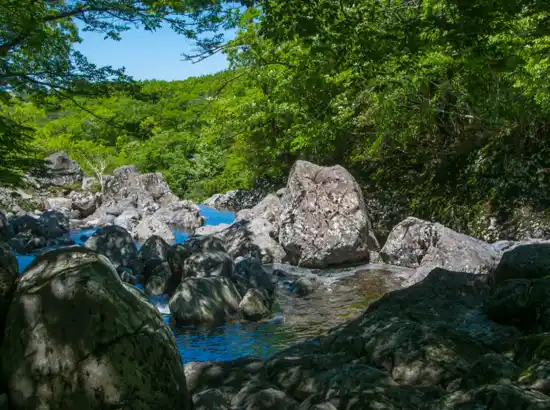
2. Moo-o Beopjeongsa – A Quiet Temple Where the Journey Begins
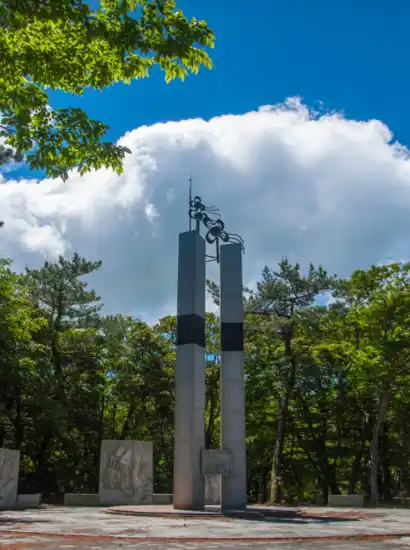
The starting point of the Hallasan Dongbaek-gil Trekking is Moo-o Beopjeongsa Temple, a peaceful Buddhist temple surrounded by forest. Despite its calm appearance, this temple holds deep historical importance as a center of the Korean independence movement during the early 1900s.
When I stood at its entrance, I naturally lowered my voice. The combination of stillness and history has a gentle way of grounding the mind. Walking past memorial stones and old walls, I felt that the forest was quietly sharing stories of the past.
This first section is gentle and ideal for warming up. It’s where travelers begin to feel the tranquility that defines Jeju’s forest culture.
3. Camellia, Cypress, and Cedar Forests – The Heart of Jeju’s Evergreen Landscape
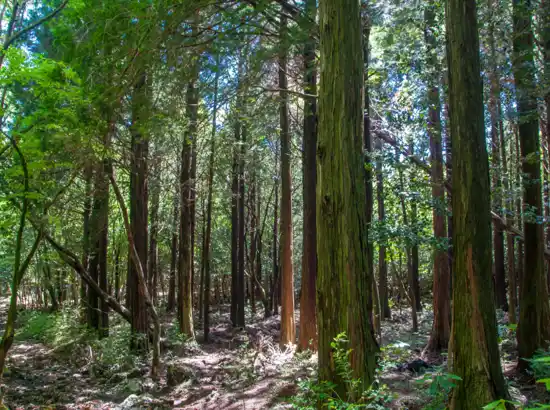
Once you leave the temple area, the Hallasan Dongbaek-gil Trekking experience deepens noticeably. The forest changes into dense camellia groves, mixed with cypress and cedar trees. The scent becomes richer, and the color of the forest turns darker green.
On spring days, bright red camellia blossoms fall across the trail like scattered petals. During early mornings after rain, drops of water shimmer on the leaves, creating a beautiful glow that feels almost magical. As you continue along the Hallasan Dongbaek-gil Trekking route, the atmosphere becomes even more immersive, surrounding you with the quiet beauty of Jeju’s evergreen forest.
Foreign travelers often say, “It feels like stepping into another world,” and I fully understand why. This entire corridor of camellia trees extends nearly 20km, forming the largest camellia forest in Korea.
4. Scenic Points – Si Oreum, Beopjeongi Oreum, and the Gentle Sound of Gongsancheon Valley
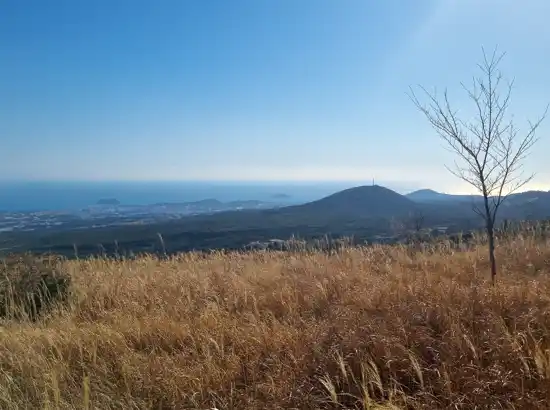
As the trail continues, hills (called oreum in Jeju dialect) slowly appear in the distance. Their soft, rounded shapes make the landscape look peaceful. This is one of my favorite parts of the Hallasan Dongbaek-gil Trekking, because the scenery suddenly widens, giving a sense of openness.
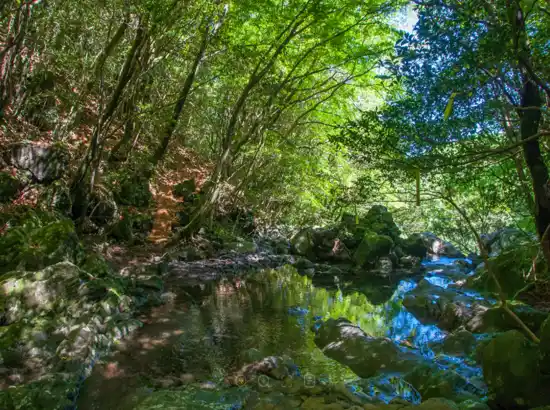
The sound of flowing water becomes clearer as you approach Gongsancheon Valley. Standing on a small wooden bridge while cool valley air brushes past your face is a refreshing moment I always remember.
After rain, thin mist settles between the trees, creating a dreamy atmosphere that travelers often describe as “a scene from a fantasy film.’
5. Approaching Donnaeko – A Gentle Finish Marked by Refreshing Valley Air
Near the end of the Hallasan Dongbaek-gil Trekking, the forest lightens and the sound of Donnaeko Valley grows stronger. The water is famously clear and cold, and dipping my hands into it felt instantly soothing after the long walk.
This spot is a beloved destination for many visitors because it offers a peaceful moment of rest after hours of trekking. The combination of clear water, volcanic rock formations, and deep forest makes it a truly calming place.
6. Entry Rules, Bus Tips, and Parking Information
Because this is a protected forest trail, the following rules apply:
- Closed on rainy days and for two days after rainfall
- No new entry after 2 PM on weekdays
- Accessible by Bus 240 (Jeju City–Jungmun) and 611/612 (Seogwipo City)
- Parking available at Moo-o Beopjeongsa and Donnaeko Trailhead
- Bring water, simple snacks, and proper walking shoes
International travelers may find public transportation time-consuming, so taxis can be a more efficient option.
7. One-Way Route Guide – From Trail to Food to Cafe
Here is the recommended travel flow:
Moo-o Beopjeongsa
→ 11.3km Hallasan Dongbaek-gil Trekking
→ Donnaeko Trailhead
→ 3 minutes by foot/car → Jeju Myeongga Duruchigi (Jeju Food)
→ 10 minutes by car → Chinbong Mountain Lodge Cafe (Jeju Cafe)
This one-day course is popular because it balances nature, local cuisine, and rest in one complete itinerary.
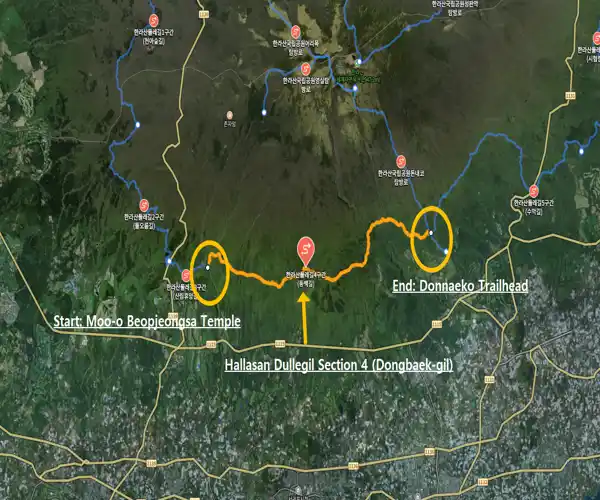
< Source, NAVER Maps >
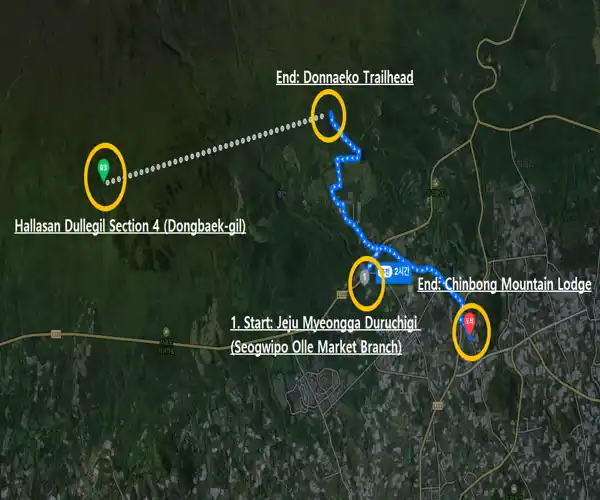
< Source, NAVER Maps >
✓ From the Donnaeko Trailhead, the combined walking distance to Jeju Myeongga Duruchigi and then to Chinbong Mountain Lodge is 3.4 km, which takes about 51 minutes on foot.
8. Jeju Myeongga Duruchigi – A Hearty Local Meal After a Long Trek
After completing the Hallasan Dongbaek-gil Trekking, I visited Jeju Myeongga Duruchigi near Donnaeko. The moment I walked inside, the aroma of warm broth and sizzling pork immediately comforted me. Their dishes combine Jeju black pork, seafood, and vegetables, cooked slowly in front of you.
The flavors are bold yet clean, and the broth has a deep richness that feels perfect after hours of walking. The fried rice at the end is especially comforting—crispy, savory, and full of flavor from the remaining sauce.
Price Table
| Menu | Price |
|---|---|
| Black Pork Stir-fry (1 serving) | 9,000 KRW |
| Abalone & Black Pork Duruchigi | 15,000 KRW |
| Myeongga Set (2 people) | 55,000 KRW |
| Jeju Special Set (4–5 people) | 140,000 KRW |
✓ Address: 2704-12, Sanloknam-ro, Seogwipo-si, Jeju.
It does not appear on Google Maps, so I am sharing the address only.
9. Chinbong Mountain Lodge – A Forest Cafe with Warm Lights and Quiet Ambience
Just a short drive from Donnaeko lies Chinbong Mountain Lodge, one of the most atmospheric Jeju Cafe spots in the area. The exterior resembles a wooden mountain cabin, and inside, soft lights and the scent of timber create a deeply relaxing space—an ideal place to unwind after the Hallasan Dongbaek-gil Trekking journey.
On rainy days, the sound of raindrops and the warm glow of the indoor fireplace make this place unforgettable. Their Irish Coffee is smooth and delicately aromatic, and their “Grilled Milk” is a comforting Korean-style cream drink that many travelers love.
Price Table
| Menu | Price |
|---|---|
| Irish Coffee | ~15,000 KRW |
| Grilled Milk | ~9,000 KRW |
| “Bong-bokki” Spicy Snack | 25,000 KRW |
| Gargamel Stew | 20,000 KRW |
| Chili Hotdog | ~16,000 KRW |

10. Final Thoughts – What Makes This Journey Special
Finishing the Hallasan Dongbaek-gil Trekking and ending the day with warm food and a cozy cafe felt like completing a perfect narrative—starting with history, passing through deep evergreen forests, and resting beside a quiet valley.
For international travelers seeking something deeper than typical sightseeing, this course offers a chance to truly feel Jeju’s gentle nature, its calm culture, and the warm hospitality of its local places.
“Check out other travel information”