If you are planning to explore traditional Korean lifestyle in an authentic outdoor setting, Jeju Folk Village is one of the most recommended cultural attractions in Jeju-do. This post provides detailed information on the Jeju Folk Village entrance fee, opening hours, ticket options and useful guidance for international visitors.
1. Where Is Jeju Folk Village Located and What Makes It Special?
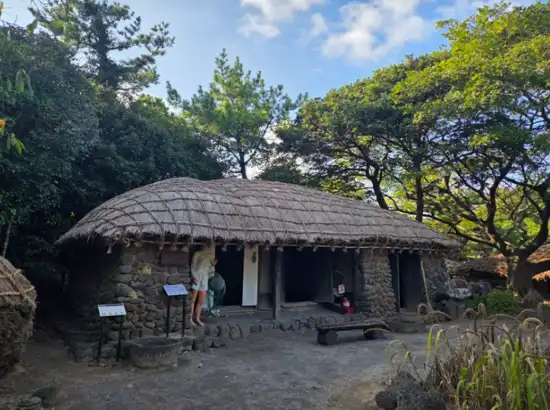
Jeju Folk Village is located in the southeastern area of Jeju Island, within the peaceful region of Pyoseon. The village is designed as an open-air living museum, fully recreating old dwellings, farm life, fishing villages and ritual spaces. Visitors gain access to restored houses, narrow stone-wall roads, ancient tools and a full representation of everyday life from the past.
It is particularly valuable for first-time foreign travelers, because with the Jeju Folk Village entrance fee, all internal themed sections are included without additional charges. The layout is well organized, with clear signage and visitor-friendly walking paths.
2. Recommended Access Routes (Airport and Landmark Reference)
Below is a simple travel reference for visitors arriving from major locations:
| Departure Point | Transportation Time | Notes |
|---|---|---|
| Jeju International Airport | Approx. 60–70 minutes | Rental car recommended |
| Seongsan Sunrise Peak | Approx. 20–25 minutes | Easy to combine with sightseeing |
| Pyoseon Beach | Approx. 5–7 minutes | Good for dining + walking plan |
Many tourists create itineraries that include: Seongsan (sunrise), Seopjikoji Coast, and Jeju Folk Village, then finish at Pyoseon Beach.
3. Jeju Folk Village entrance fee & Pricing Information
Below is the standard Jeju Folk Village entrance fee table for on-site tickets.
Online prices can be lower, but discounts vary by platform, date, and package, so please confirm the final amount before payment.
Table: Jeju Folk Village ticket price (on-site standard)
| Category | Individual (On-site) | Group (20+ people) | Notes |
|---|---|---|---|
| Adult | ₩15,000 | ₩12,000 | Standard adult ticket |
| Teenager | ₩12,000 | ₩8,000 | Age category follows on-site policy |
| Child | ₩11,000 | ₩7,000 | Age category follows on-site policy |
Many international visitors prefer online booking because QR tickets are often issued instantly and scanned at the entrance for faster entry.
Online booking notes:
- QR ticket scanning at the entrance (faster entry)
- Easy schedule confirmation in advance
- Discount amount is not fixed (depends on the booking platform and date)
4. Opening Hours & Best Viewing Time Recommendation
Jeju Folk Village operates with seasonal opening hours, so it helps to plan your visit by month. Most visitors spend about 90–120 minutes inside, depending on photo stops and break time.
Table: Jeju Folk Village opening hours (seasonal schedule)
| Season / Month | Opening Hours | Tip |
|---|---|---|
| Oct–Feb | 08:30–17:00 | Arrive earlier for a more relaxed pace |
| March | 08:30–17:30 | Generally less crowded than peak months |
| Apr–Sep | 08:30–18:00 | Better daylight for photos after 15:00 |
Best time to visit (practical tips):
- Enter before 10:00 AM for quieter paths
- Visit after 3:00 PM for better lighting
- Avoid peak time 11:30–14:00 if possible
Operating hours may change due to weather or special events. If your schedule is tight, confirm the latest hours before visiting.
5. Ticket Purchase Methods & Verification Flow
Below is the general process to purchase and confirm the Jeju Folk Village entrance fee:
| Method | Advantage |
|---|---|
| Online Booking | Skip ticket line, QR access, guaranteed entry |
| On-site Desk | Flexible time change, good for spontaneous plan |
| Travel Agency Package | Admission included automatically |
Upon completion of booking, visitors receive digital confirmation that is scanned immediately at the entrance. If traveling with seniors, online booking minimizes waiting time and ensures stable entry timing.
6. A Detailed Look Inside—Zones & Authentic Cultural Sections
Inside the village, exhibitions are divided by life background and purpose:
| Zone Type | Main Features |
|---|---|
| Farming Village Zone | Storage house, personal well, mill house, vegetable storage |
| Fishing Village Zone | Sea village replica, nets, fishing basket structures |
| Livestock Pasture Zone | Shared grazing area and horse-farm reproduction |
| Ritual & Administrative Zone | Heritage-based education, formal ceremony spaces |
The Jeju Folk Village entrance fee includes admission to all themed areas, and no additional payment is needed for general exhibitions.
Notable viewing points include:
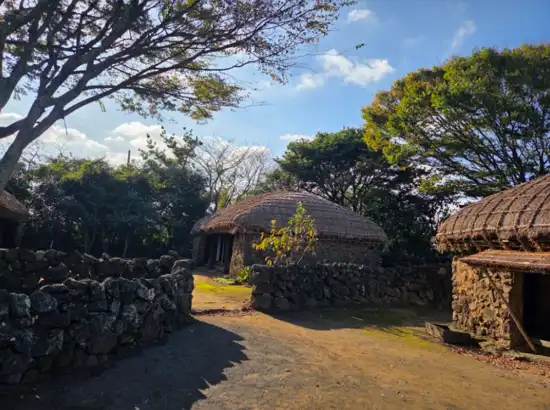
✔ traditional roof structures with layered thatching
✔ curved stone walls outlining pathways
✔ front-gate arrangements from village leader houses
✔ ritual installation areas from local customs
Foreign visitors often mention that it feels like stepping into a fully preserved rural lifestyle environment.
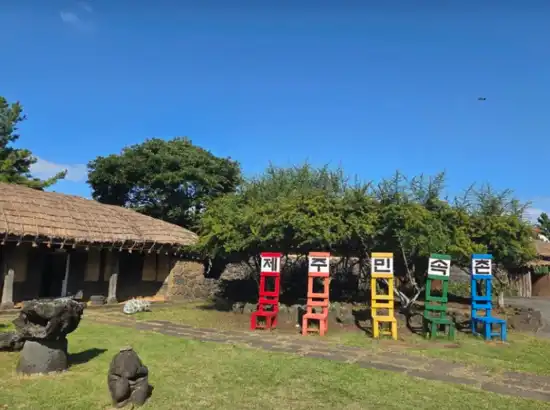
7. Comparison with Seongeup Folk Village (For Visitor Decision Making)
Although both are widely known, there is a fundamental difference:
| Feature | Jeju Folk Village | Seongeup Village |
|---|---|---|
| Structure | Re-created museum village | Active residential community |
| Viewing Type | Guided walking path | Open village walking |
| Content | Exhibition-rich, curated | Everyday living observation |
| Recommendation | For first-time cultural visit | For authentic lifestyle observation |
With Jeju Folk Village entrance fee, visitors receive a curated experience—ideal for those learning Korean heritage for the first time. Seongeup is better for travelers preferring open-neighborhood style viewing.
8. Family Convenience—Facilities and Experience Value
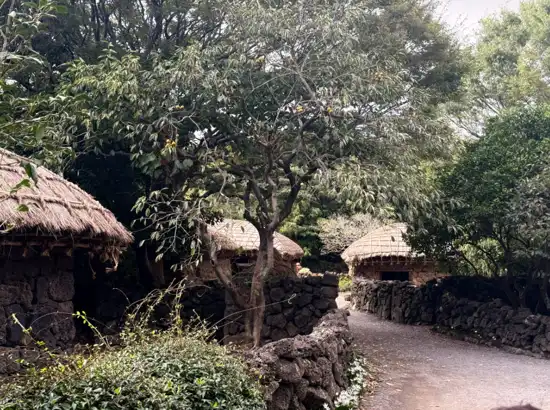
Families often appreciate the walkable routes, stroller-friendly pathways, signage clarity and clean resting spots. Cultural displays are located at sections spaced closely, which helps when traveling with children.
Because the Jeju Folk Village entrance fee already includes the majority of viewing content, visitors can take their time without cost concerns.
Recommended experiences for families:
- photo areas beside traditional farmland
- outdoor architectural layout exploration
- traditional roof and courtyard photography
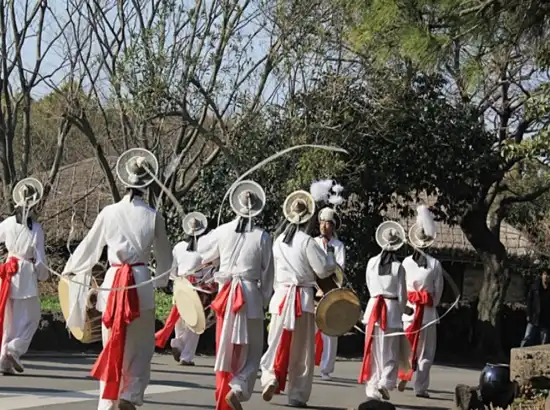
9. Parking Guidance & Visitor Amenities
The parking area is adjacent to the main entrance and does not require long walking transitions.
Amenities inside include:
- ticket desk
- rest seating zone
- pavilion-style waiting spots
- souvenir display areas
The Jeju Folk Village entrance fee does not restrict these amenities, and visitors can move freely across zones.
10. Suggested Single-Flow Itinerary (One-time Section)
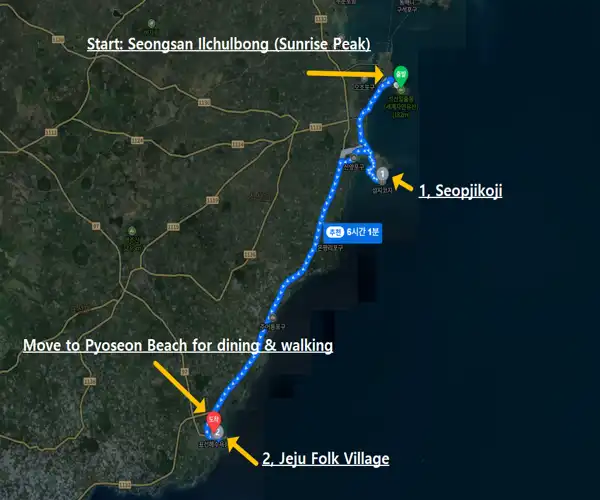
< Source, Naver Map >
✓ The total distance is about 24 km, and the driving time is roughly 40 minutes depending on traffic conditions.
Here is an efficient example route suitable for both foreign travelers and families:
▶ Seongsan Sunrise Peak
→ Seopjikoji Coastline
→ Jeju Folk Village entrance fee admission
→ Pyoseon Beach walkway & dining
This route maintains realistic time control and minimizes long-distance driving.
“Check out other travel information”