When you visit Jeonju, bibimbap is one of those dishes that naturally comes to mind along with Jeonju Hanok Village.
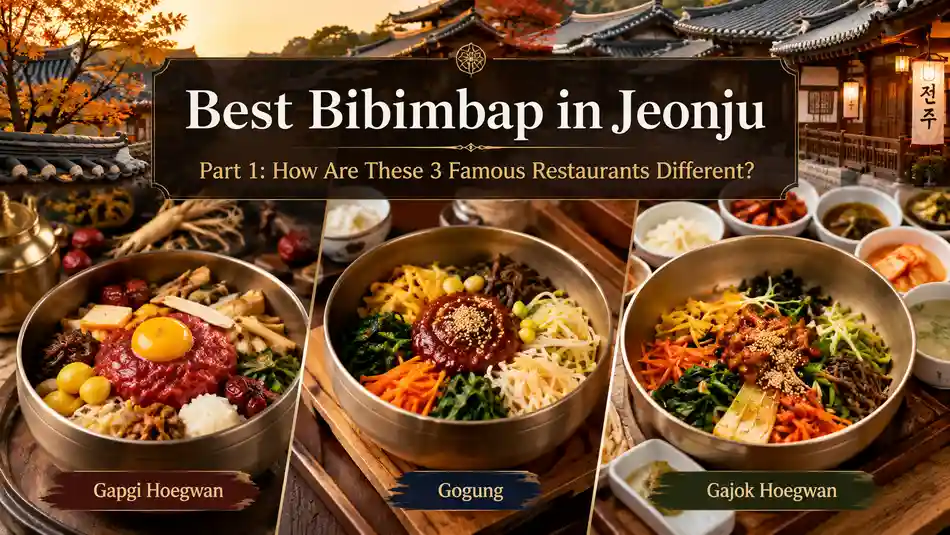
While searching for the best bibimbap in Jeonju, three names appear again and again: Gapgi Hoegwan, Gogung, and Gajok Hoegwan.
All three are well-known for traditional Jeonju bibimbap, but the rice, gochujang, yukhoe, and side dishes make each experience surprisingly different.
Instead of simply choosing the most famous restaurant, it helps to think about what kind of bibimbap experience you actually want.
Table of Contents
1. How Are These Three Jeonju Bibimbap Restaurants Different?
When comparing three popular choices for the best bibimbap in Jeonju, their individual styles quickly become clear.
Gapgi Hoegwan stands out for rice prepared with medicinal herbs, while Gogung is an approachable place to experience classic Jeonju-style bibimbap.
Gajok Hoegwan, on the other hand, feels more like a complete Korean meal, with bibimbap accompanied by soup and a generous selection of side dishes.
| Restaurant | Main Feature | Signature Dishes | Best For |
|---|---|---|---|
| Gapgi Hoegwan | Rice prepared with medicinal herbs | Medicinal Bibimbap, Yukhoe Bibimbap | Travelers looking for something different |
| Gogung Jeonju | Traditional Jeonju-style bibimbap | Jeonju Bibimbap, Yukhoe Bibimbap, Dolsot Bibimbap | First-time visitors |
| Gajok Hoegwan | Master’s tradition and full Korean meal | Jeonju Bibimbap, Yukhoe Bibimbap | Travelers who enjoy plenty of side dishes |
Although all three serve Jeonju bibimbap, the overall dining experience is quite different.
Think of Gapgi Hoegwan for uniqueness, Gogung for tradition, and Gajok Hoegwan for a generous Korean table setting.
If your Jeonju itinerary is short, considering the restaurant location along with the menu can make the decision much easier.
2. Gapgi Hoegwan: What Makes Its Medicinal Bibimbap Special?
Gapgi Hoegwan is one of the more distinctive choices when searching for the best bibimbap in Jeonju.
Its signature medicinal bibimbap starts with rice prepared using various medicinal herbs, then adds fresh vegetables and yukhoe, or Korean-style seasoned raw beef.
Ingredients such as chestnuts and jujubes can also appear in the bowl, giving it a noticeably different character from more familiar versions of bibimbap.
| Gapgi Hoegwan | Details |
|---|---|
| Address | 50 Sangni-ro, Deokjin-gu, Jeonju |
| Hours | 11:00 a.m.–9:00 p.m. |
| Signature Dishes | Medicinal Bibimbap, Yukhoe Bibimbap |
| Parking | Available |
| Reservations | Available |
| Phone | 063-212-5766 |
The gochujang is served separately, so adding a little at a time makes it easier to enjoy the flavors of the rice and toppings before making the bowl too spicy.
Different tourism sources mention different numbers of herbs used in the rice, so the safest way to describe it is simply as rice prepared with a variety of medicinal herbs.
If you assumed that every bowl of Jeonju bibimbap would taste similar, Gapgi Hoegwan is probably the place where you will notice the biggest difference.
3. Gogung: A Classic Introduction to Jeonju Bibimbap
Gogung is an easy choice for travelers trying the best bibimbap in Jeonju for the first time.
The menu includes traditional Jeonju bibimbap, yukhoe bibimbap, and dolsot bibimbap served in a hot stone bowl, so it is easy to choose according to your preference.
If you are traveling with family or friends, you can also add dishes such as tteokgalbi or grilled beef for a more substantial Korean meal.
| Gogung Jeonju | Details |
|---|---|
| Address | 33 Songcheon-jungang-ro, Deokjin-gu, Jeonju |
| Hours | 11:00 a.m.–9:00 p.m. |
| Last Order | 8:30 p.m. |
| Traditional Jeonju Bibimbap | Around KRW 14,000 |
| Yukhoe Bibimbap | Around KRW 18,000 |
| Parking | Available |
When the bowl arrives, the colorful vegetables and toppings are arranged so neatly that you may want to look at everything before mixing it together.
Yukhoe bibimbap is especially satisfying if you enjoy the contrast between crisp vegetables and tender raw beef.
With convenient parking and a relatively spacious dining area, Gogung also works well for families and groups traveling around Jeonju by car.
※ Menu prices may change.
4. Gajok Hoegwan: A Traditional Meal Built Around a Master’s Recipe
At Gajok Hoegwan, enjoying the best bibimbap in Jeonju feels less like ordering a single bowl and more like sitting down for a complete Jeonju-style meal.
The restaurant is known for continuing the tradition of Jeonju food master Kim Nyeon-im, and bibimbap is served alongside various side dishes, soybean sprout soup, and soft steamed egg.
As the table begins to fill, the experience becomes about much more than just bibimbap.
| Gajok Hoegwan | Details |
|---|---|
| Address | 17 Jeollagamyeong 5-gil, Wansan-gu, Jeonju |
| Hours | 10:30 a.m.–8:00 p.m. |
| Signature Dishes | Jeonju Bibimbap, Yukhoe Bibimbap |
| Jeonju Bibimbap | Around KRW 14,000 |
| Yukhoe Bibimbap | Around KRW 17,000 |
| Highlight | Generous Korean side dishes |
This is a good place to slow down rather than rushing through a single bowl of bibimbap.
For international visitors, it also offers an easy introduction to Korean dining culture, where several small side dishes are shared and enjoyed alongside the main meal.
Its location is another advantage, especially if you plan to explore Jeollagamyeong and Jeonju Hanok Village on the same day.
5. Which of the Three Should You Choose?
Choosing the best bibimbap in Jeonju is really more about the kind of meal you want than restaurant ratings alone.
If you want something noticeably different from ordinary bibimbap, Gapgi Hoegwan is the most distinctive choice.
For a classic first experience, Gogung is easy to recommend, while Gajok Hoegwan is better suited to travelers who want a full Korean table with plenty of side dishes.
| If You Want… | Recommended Restaurant |
|---|---|
| A unique Jeonju bibimbap | Gapgi Hoegwan |
| Your first Jeonju bibimbap | Gogung |
| Medicinal bibimbap | Gapgi Hoegwan |
| Yukhoe bibimbap | All three |
| Plenty of Korean side dishes | Gajok Hoegwan |
| A family-friendly meal | Gogung or Gajok Hoegwan |
| Easy access by car | Gapgi Hoegwan or Gogung |
Trying all three would be an interesting food experience, but most travelers only have time for one during a short visit.
Looking at menu style, who you are traveling with, and your sightseeing route usually makes the choice much easier.
Opening hours and menu prices can change, so checking the latest information before you go is always a good idea.
6. How to Add Jeonju Bibimbap to Your Sightseeing Route
When planning where to try the best bibimbap in Jeonju, it is much more convenient to connect your meal with nearby attractions instead of traveling across the city only for a restaurant.
Gajok Hoegwan fits especially well with Jeollagamyeong and Jeonju Hanok Village, while Gapgi Hoegwan and Gogung are easier to include if you are traveling by car.
After spending a few hours walking around the Hanok Village, sitting down for a warm bowl of bibimbap feels like a natural part of a day in Jeonju.
| Travel Style | Suggested Route |
|---|---|
| Hanok Village-focused | Hanok Village → Gyeonggijeon Shrine → Jeollagamyeong → Gajok Hoegwan |
| Driving Trip | Sightseeing → Gapgi Hoegwan → Café |
| Family Trip | Sightseeing → Gogung → Hanok Village |
| Food Trip | Bibimbap → Nambu Market → Jeonju snacks |
| Full-Day Trip | Gyeonggijeon → Hanok Village → Bibimbap → Nambu Market |
Around Jeonju Hanok Village, attractions such as Gyeonggijeon Shrine, Jeondong Cathedral, and Omokdae are close enough to explore on foot.
Once you decide whether bibimbap will be lunch or dinner, arranging the rest of the itinerary becomes much easier.
After your meal, heading to Nambu Market or a café in the Hanok Village keeps the day flowing naturally instead of making the restaurant feel like a separate stop.
FAQ
Q1. Which restaurant is best for trying Jeonju bibimbap for the first time?
Gogung is probably the easiest place to start. It offers traditional Jeonju bibimbap, yukhoe bibimbap, and dolsot bibimbap, so first-time visitors can choose a style that suits them. It is also convenient for families and larger groups.
Q2. How is Gapgi Hoegwan’s medicinal bibimbap different from regular bibimbap?
The biggest difference is the rice. It is prepared using various medicinal herbs, while ingredients such as yukhoe, vegetables, chestnuts, and jujubes give the bowl a more distinctive flavor and texture. It is a good choice if you want something different from standard bibimbap.
Q3. Which restaurant is easiest to combine with Jeonju Hanok Village?
Gajok Hoegwan is especially convenient if sightseeing is your priority. It can be combined easily with Jeollagamyeong, Gyeonggijeon Shrine, Jeondong Cathedral, and Jeonju Hanok Village. If you are driving, Gapgi Hoegwan and Gogung also become easy options.
Quick Summary
If you are looking for the best bibimbap in Jeonju, comparing the differences between these three restaurants makes the choice much easier.
Gapgi Hoegwan is known for medicinal-style bibimbap, Gogung for classic Jeonju bibimbap, and Gajok Hoegwan for its traditional master recipe and generous Korean table setting.
Choose Gogung for a first taste, Gapgi Hoegwan for something unique, or Gajok Hoegwan if you want plenty of side dishes with your meal.
Add Jeonju Hanok Village, Gyeonggijeon Shrine, Jeollagamyeong, or Nambu Market, and your bibimbap stop naturally becomes part of the entire Jeonju travel experience.
※ Opening hours, days off, menu items, and prices may change, so check the latest information before visiting.