Hidden between Gyeongbokgung Palace and Changdeokgung Palace, Bukchon Hanok Village is a traditional Korean neighborhood where history breathes through every alleyway. Here, wooden doors, curved roof tiles, and calm courtyards create a perfect harmony of tradition and modern Seoul.
If you wish to experience the real essence of Korean culture — not just sightseeing, this guide will walk you through the best spots, experiences, cafés, prices, and cultural etiquette, based on my own visit to Bukchon.
1, What Is Bukchon Hanok Village?
Bukchon Hanok Village is a 600-year-old residential area located in central Seoul. Once home to noble families during the Joseon Dynasty, it remains a living neighborhood today,
filled with over 900 traditional houses, or hanok.
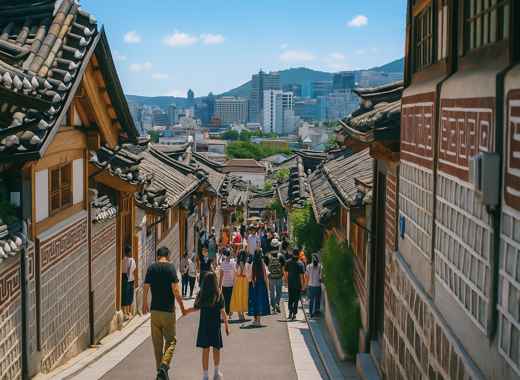
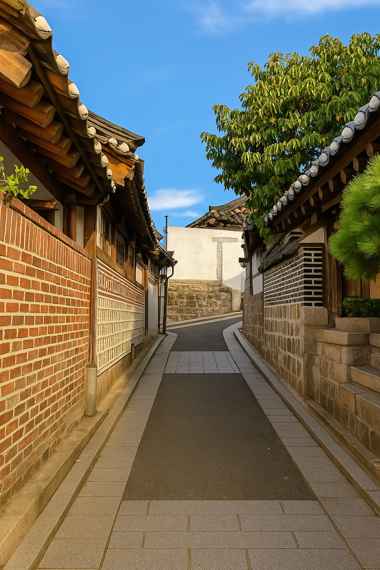
When I first walked through its narrow lanes on a crisp autumn afternoon, the golden sunlight reflected softly on the tiled roofs, and an old radio playing inside a hanok made me pause. For a moment, I forgot I was in a metropolis — it felt like a quiet countryside village preserved in time.
2, Must-See Spots and Photo Points
| Area | Highlight | Why Visit |
|---|---|---|
| Gahoedong 31-gil | Signature photo spot | Perfect view of Hanok roofs and Namsan Tower |
| Bukchon 8 Views | Scenic walking points | Traditional walls and stone stairs |
| Bukchon Cultural Center | Hands-on experience | Tea ceremony, calligraphy, crafts |
| Gyedong-gil | Modern Hanok cafés | Trendy and peaceful at once |
The famous view from Gahoedong 31-gil captures everything Seoul represents — the old and the new, tradition and speed. It’s one of the most photographed streets in Bukchon Hanok Village, especially in the morning when the air is quiet and soft.
2, Experience Hanbok and Korean Traditional Culture
Wearing a hanbok while exploring Bukchon is one of the most popular experiences among visitors. You can find Hanbok rental shops in Bukchon for about 15,000–25,000 KRW per day, and if you wear hanbok, you can enter Gyeongbokgung Palace for free.
When I wore hanbok myself, an elderly woman passing by smiled and said, “Your dress brings back memories.” That short moment of warmth made me realize how alive this village still is.
Besides clothing, you can also try a traditional tea ceremony, Korean craft workshop,
or even pottery classes inside Hanok studios — beautiful ways to touch Korea’s living traditions.
3, Where to Rest — Bukchon Cafés and Tea Houses
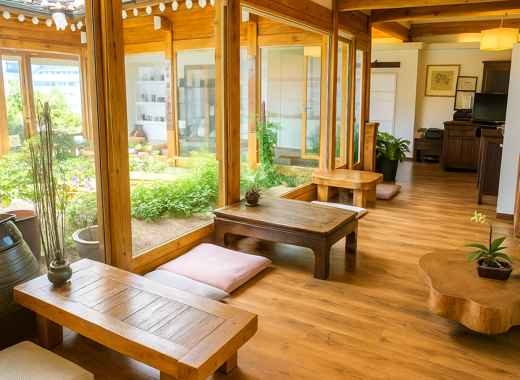
If you need a quiet break, visit one of the Bukchon Hanok cafés or tea houses. Popular spots include Cha Masineun Tteul and Yeonwoo Hanok Tea Room.
Sitting by the wooden window, sipping warm green tea while the light filters through the paper doors, I could hear distant temple bells echoing softly. It’s not just a drink — it’s a moment of stillness.
For many visitors, this is their first encounter with Korean tea culture in Bukchon, a calming ritual that defines slow travel in Seoul.
<The tea is the garden, the location information>
4, Visiting Tips and 2025 Regulations
Since 2025, part of Bukchon (especially Bukchon-ro 11-gil) has been designated as a quiet zone. Visitors are not allowed after 5 PM to protect residents’ privacy. Violating this rule can result in fines, so plan your walk between 9 AM and 4 PM.
Remember that Bukchon Hanok Village is still a residential area. Please avoid loud voices, drones, or touching private doors and walls. Being considerate keeps this beautiful place alive for future travelers.
5, Nearby Attractions — One-Day Course Around Bukchon
| Route | Distance | Highlight |
|---|---|---|
| Gyeongbokgung → Bukchon | 10 min walk | Royal palace meets traditional homes |
| Bukchon → Samcheong-dong | 15 min walk | Art galleries and dessert cafés |
| Bukchon → Insa-dong | 20 min walk | Souvenir shops and calligraphy stores |
| Bukchon → Changdeokgung Secret Garden | 12 min walk | UNESCO Heritage royal garden |
My personal recommendation is to start from Bukchon, walk down to Samcheong-dong, and end the day in Insa-dong. It’s a route that naturally connects art, food, and calm — the very rhythm of Seoul.
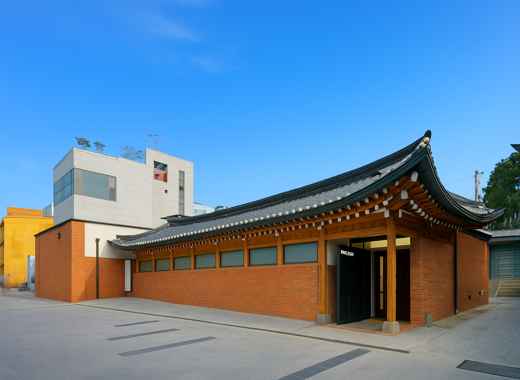
⁕ It takes about 10 minutes on foot from Bukchon Hanok Village to the “Hakgojae” Gallery in a 675-m-long walk. Hakgojae is a place that contains Korea’s traditional philosophy and spirit.
6, Price & Visitor Information
| Category | Details |
|---|---|
| Entrance | Free |
| Hanbok Rental | 15,000–25,000 KRW (4 hours – 1 day) |
| Cultural Experience | 10,000–20,000 KRW (tea, craft, calligraphy) |
| Café Price | 7,000–9,000 KRW for tea or desserts |
| Opening Hours | 09:00 – 17:00 (Quiet Zone after 17:00) |
| Best Seasons | Spring (cherry blossoms), Autumn (maple leaves) |
| Nearest Station | Anguk Station (Line 3, Exit 2) |
7, My Personal Impression
Unlike many tourist attractions, Bukchon Hanok Village isn’t glamorous. It’s subtle, gentle, and deeply human. Each corner tells a quiet story — of neighbors chatting, of wooden doors creaking, of a city that has learned how to live with its past.
As I walked through the alleys, the scent of pine and old timber mixed with the chill of autumn air. I realized this was not a museum, but a living community. Bukchon Hanok Village is where you can feel Seoul’s warmth — not from neon lights, but from history itself.
8, Travel Information
- Address: 37 Gyedong-gil, Jongno-gu, Seoul
- Subway: Line 3 Anguk Station Exit 2
- Recommended Time: 09:00 – 11:00 AM for calm photos
- Nearby Spots: Gyeongbokgung Palace, Samcheong-dong, Insa-dong
• Bukchon Hanok Village is located 7 minutes walk from Anguk Station
In Short
Bukchon Hanok Village is where you can slow down in the middle of the world’s busiest city. It’s Seoul’s most peaceful neighborhood — a place where tradition quietly coexists with modern life, and every step feels like a journey through time.
“Check out other travel information”