Right in the heart of Seoul, just beyond Jongno 5-ga Station, lies Gwangjang Market —
a place where Korea’s everyday life, flavors, and people meet in the most authentic way.
The smell of frying pancakes, the sound of sizzling oil, and the cheerful greetings of vendors fill the narrow alleys with warmth. If you wish to experience Seoul’s real traditional market, this is where you truly feel the city’s rhythm.
1. What is Gwangjang Market?
Founded in 1905, Gwangjang Market is one of the oldest permanent traditional markets in Seoul. It started as a textile and fabric market, but today it has evolved into a lively hub filled with Korean street food, fabrics, and vintage fashion. For many locals, it’s still “our market.” For travelers, it’s often called the Seoul Street Food Heaven.
When you step inside, the air is filled not with smoke, but with the nutty aroma of mung beans, and the friendly voices of merchants call out with a sincerity that feels like home.
The market’s energy isn’t overwhelming — it slows your pace and reminds you to look, listen, and taste.
2. How to Get There from Jongno 5-ga Station
Take Seoul Metro Line 1 and get off at Jongno 5-ga Station. From Exit 7 or 8, it’s less than a 2-minute walk to the main entrance of Gwangjang Market. You can also walk along Cheonggyecheon Stream, which naturally leads you to the market. It’s close to Dongdaemun and Euljiro, so it’s perfect to include in a one-day Seoul travel course.
✔ Suggested route: Cheonggyecheon Stream → Gwangjang Market → DDP (Dongdaemun Design Plaza)
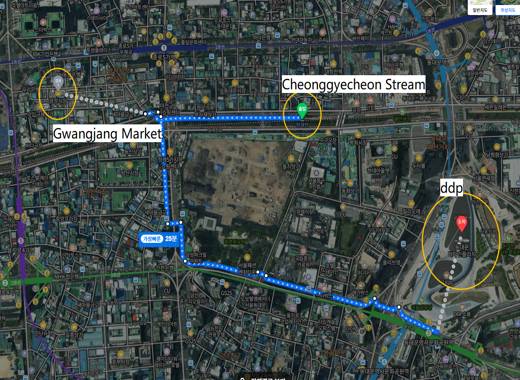
Source, NAVER Maps
• The distance from Cheonggyecheon Stream to Gwangjang Market Dongdaemun Design Plaza is a good section to walk 1.4km.
3. Must-Try Street Foods
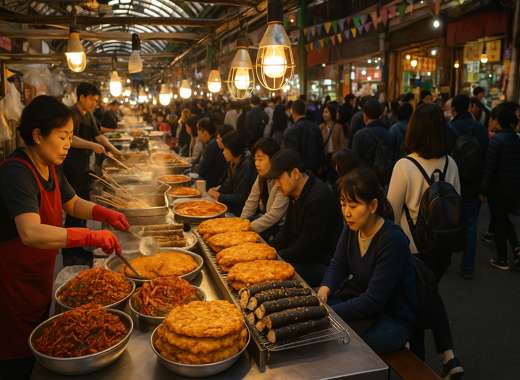
The market is famous for its food alleys where delicious smells drift through the air. Here are some dishes you absolutely shouldn’t miss:
| Dish | Description | Price (₩) |
|---|---|---|
| Mung Bean Pancake (빈대떡) | Crispy outside, soft inside; made from freshly ground mung beans. | 6,000 – 8,000 |
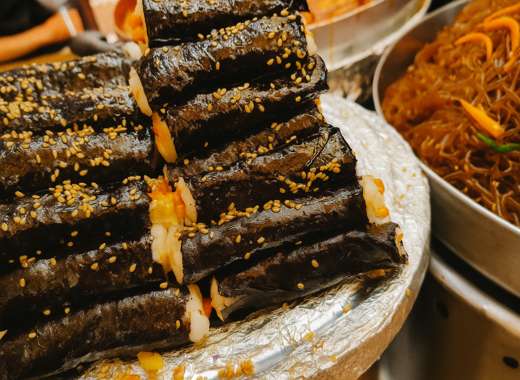
| “Mayak” Mini Gimbap (마약김밥) | Bite-sized rice rolls dipped in spicy mustard soy sauce. Addictive! | 4,000 – 5,000 |
| Yukhoe (육회 – Raw Beef) | Fresh raw beef with pear slices and egg yolk on top. | 15,000 – 18,000 |
| Kalguksu / Noodle Soup | Simple, warm noodle soup loved by locals. | 6,000 – 7,000 |
When I first visited, the sound of sizzling pans drew me in. I ordered one freshly fried mung bean pancake, and as I bit into it, the crispy texture gave way to soft, nutty warmth — simple yet unforgettable. Every bite felt like tasting Seoul’s soul.
Gwangjang Market isn’t just about eating; it’s about connecting with people. Here, food carries stories — of families, recipes, and shared smiles.
4. Shopping and Atmosphere
Above the food alleys, the upper floors are lined with hanbok (traditional Korean dresses) and silk fabric stores. Sunlight filtering through colorful fabrics makes the whole floor glow softly. Today, you’ll also find vintage clothing shops and trendy pop-up stores —
proof that tradition and youth can coexist beautifully in one space.
As I wandered through the narrow lanes, I noticed that everyone seemed relaxed. The mix of sizzling food, vendors chatting with customers, and laughter in the air creates a special kind of harmony — the heartbeat of a Seoul traditional market.
5. Travel Tips and Nearby Attractions
- Hours: 8:30 AM – 10 PM (Food area often open late)
- Closed: Some shops on Sundays
- Payment: Cards accepted, but keep a small amount of cash for small items.
- Photo Tip: Always ask before taking close-up photos of vendors.
You can easily make it part of a Seoul travel course:
Cheonggyecheon Stream → Gwangjang Market → DDP → Dongdaemun Fashion Street
Around sunset, when the market lights start to glow, the atmosphere turns magical. Steam rises from the food stalls, neon signs flicker above, and laughter echoes between the alleys — it’s a moment that captures both nostalgia and warmth, all at once.
Tip : If you don’t know anything, look around. You will be able to see people. Most people can even direct you to your destination in person. ^^
6. Why You Should Visit
Gwangjang Market is not just a place to eat and shop; it’s a living museum of Seoul’s history and people. Here, you can feel the real Seoul, full of sincerity, energy, and hospitality.
When I walked out of the market that evening, I felt full — not only from food, but from the kindness I’d encountered. If you want to understand Korea beyond the skyscrapers and shopping malls, start with this market. Smiles are universal, and at Gwangjang Market, food becomes a language everyone speaks.
“Check out other travel information”