“This guide is part of the Seoul Winter Festa 2025 series covering major events taking place across central Seoul.”
Among all year-end events in Korea, the most symbolic and culturally meaningful one is the New Year Bell-Ringing Ceremony held at Boshingak in central Seoul. This tradition is more than a countdown moment—it’s when the city collectively transitions into the new year, sharing the same sound, atmosphere, and anticipation.
Core Summary
The New Year Bell-Ringing Ceremony takes place exactly at midnight on December 31.
When the bell rings 33 times, it marks the official beginning of the new year in Korea.
This moment is experienced by thousands standing together in an open plaza, making it one of the most iconic winter experiences in Seoul.
1. Event Schedule and Location Information
The New Year Bell-Ringing Ceremony is an official public event hosted by Seoul City and accessible to everyone without a ticket.
Event Details
- Ceremony date: December 31, 2025
- Ceremony begins near midnight
- Main ringing moment: 00:00
- Location: Boshingak Pavilion, Jongno-gu
- Admission: Free
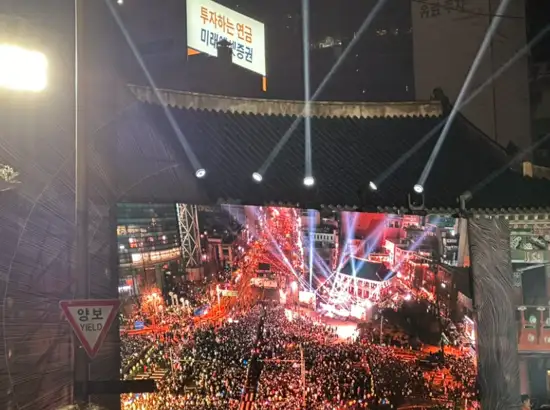
As the time approaches midnight, stage lighting, countdown screens, and crowd cheering gradually synchronize. International visitors often describe this moment as
“standing in the exact second when time changes for an entire city.”
2. How is the ceremony structured?
The New Year Bell-Ringing Ceremony follows a clear sequence so visitors can easily understand what will happen next.
Typical flow of the night:
- Live opening performances
- Hosts and public introduction
- Appearance of citizen representatives
- Final countdown
- New Year Bell-Ringing Ceremony at midnight
- Closing segment
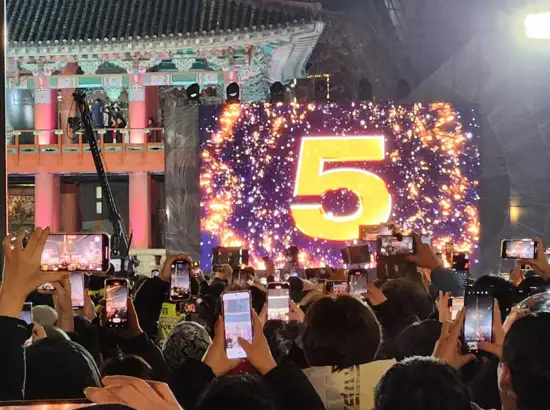
During the 10-second countdown, the lighting focuses toward the bell pavilion, and the entire crowd shouts the numbers together until the final second arrives.
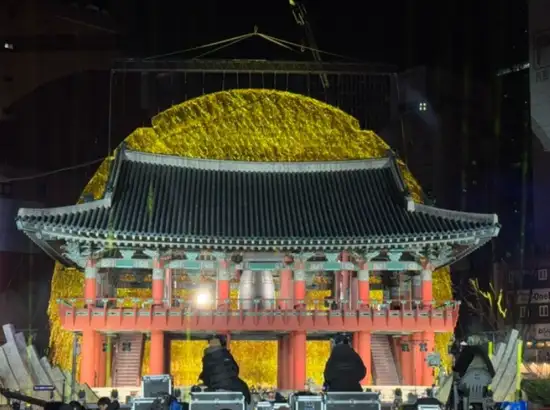
3. Why does the bell ring exactly 33 times?
The ringing of 33 strikes during the New Year Bell-Ringing Ceremony carries historical significance rooted in Korean traditional beliefs and time-signaling practices.
Key meanings often explained:
- Symbol of clearing burdens before the new year
- Historical practice of announcing major city transitions
- Representation of renewal and beginning
The moment is quiet yet deeply emotional, as the sound spreads through surrounding buildings and slowly fades into the night.
4. How are citizen representatives selected and involved?
Another unique feature of the New Year Bell-Ringing Ceremony is that selected citizens participate directly in the ringing process.
Representatives are often chosen among:
- Public service contributors
- Rescue and support workers
- Social impact volunteers
- Honored civic participants
Their participation gives symbolic meaning to the event— as if the new year is opened on behalf of the community.
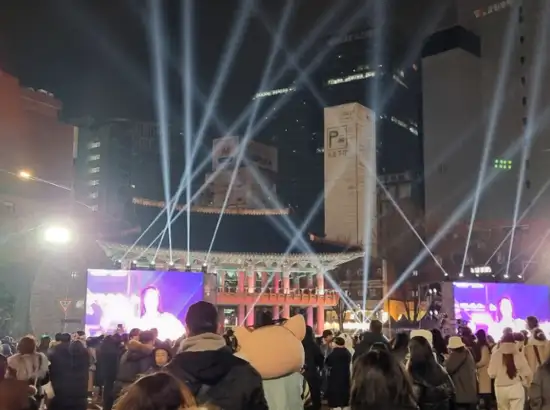
5. Recommendations for arrival time and waiting strategy
Due to the size of the crowd, timing affects comfort and visibility.
Recommended arrival times
- Before 21:30 → Closest space and clear visibility
- 22:00–23:00 → Standard viewing area
- After 23:00 → Dense formation and reduced movement
Nearby stations
- Jonggak Station
- City Hall Station
- Euljiro-1-ga Station
Many visitors appreciate arriving slightly earlier, taking photographs, and enjoying the winter atmosphere until midnight.
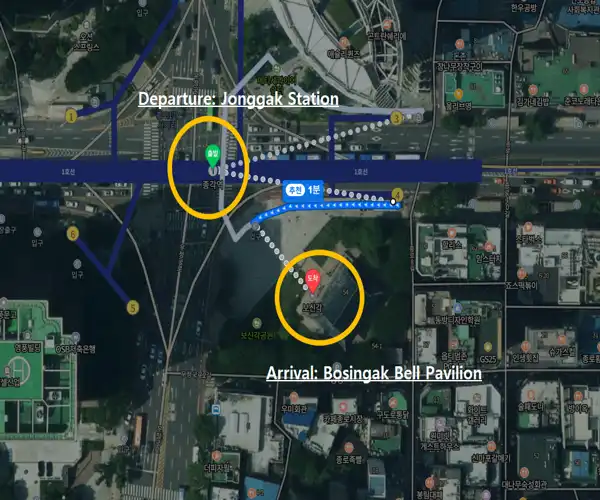
< Source, Naver Map>
✓ You can walk from Jonggak Station to Bosingak in just about 1 minute.
6. Traffic arrangements and how to exit comfortably
Because the New Year Bell-Ringing Ceremony gathers thousands of people simultaneously, traffic lanes around Boshingak are temporarily controlled.
Noticeable arrangements:
- Partial vehicle restriction before the ceremony begins
- Guided pedestrian-only movement lanes
- Gradual flow release after closing
- Dedicated exit zones
To avoid congestion, waiting 5–10 minutes after the bell finishes allows a smooth exit.
7. Actual impressions and atmosphere of the ceremony
Although the night air is cold, the shared experience during the New Year Bell-Ringing Ceremony gives warmth. Visitors often describe hearing the bell as a moment when the city briefly holds its breath.
What people actually feel:
- Deep quietness followed by cheering
- Warm messages exchanged among strangers
- Recognition that a new chapter starts at the exact same second
This combination of tradition, sound, and winter air creates a lasting memory.
8. Recommended route after the ceremony (realistic late-night route)
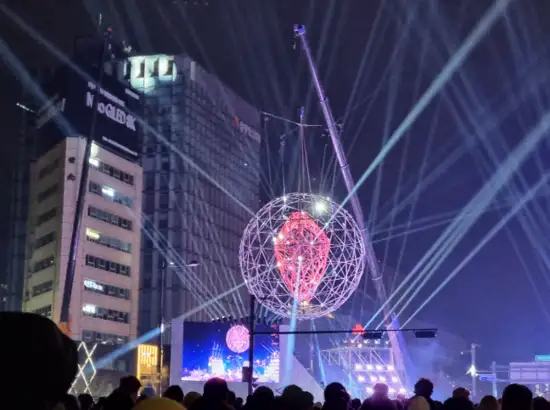
Immediately after the New Year Bell-Ringing Ceremony, many visitors move toward Seoul Plaza rather than leaving right away.
Suggested natural movement path
Ceremony ends → Walk toward Seoul Plaza → View illuminated installations → Begin departure
Why this route is ideal:
- Avoids peak movement timing
- Allows visitors to reflect before leaving
- Accessible, open-space walkway
- Well-lit and easy for international travelers
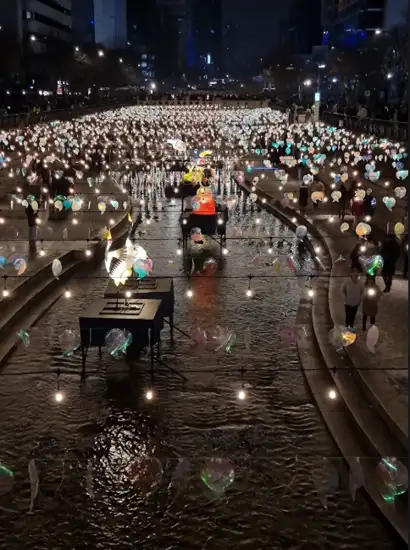
Near the plaza, seasonal installations, winter ornaments, and message displays are often placed for photography and short stays.
9. Seasonal attractions that connect well with the ceremony
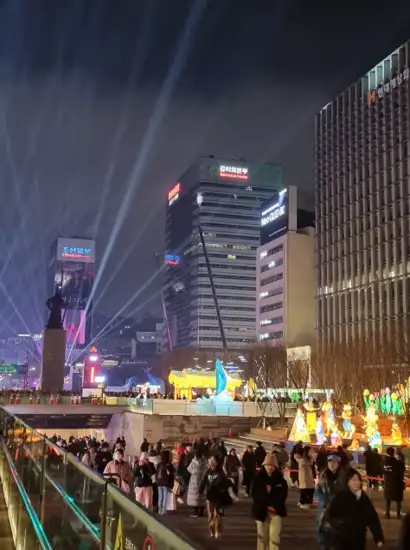
After the New Year Bell-Ringing Ceremony, nearby winter highlights are within walking distance:
Recommended add-on locations:
- Seoul Plaza Ice Rink
- Seasonal light displays at City Hall Square
- Night pathway alongside Deoksugung Palace
These spots allow visitors to extend the atmosphere gently without rushing into transportation.
10. Why this ceremony is meaningful for international visitors
For international travelers, this is perhaps the only moment where:
- A historical bell pavilion
- A modern capital city
- Thousands of participants
- A shared countdown moment
all converge physically and symbolically.
The sound of the New Year Bell-Ringing Ceremony, amplified between buildings, is something that photographs cannot fully express, making the moment emotional long afterward.
“Check out other travel information”
✓ This event is part of Seoul Winter Festa 2025 festival held across central Seoul during December and New Year season.