Free admission can make the plan feel simple, but the schedule is not always the same every day. If you miss temporary closure dates (2026-02-24) or the temporary closure of Permanent Gallery 2 (2026-02-23 to 02-27), your visit time can shrink fast.
Right now, two special exhibitions run at the same time, so it helps to decide what to prioritize before you arrive. This post organizes the key facts first, then adds practical routes for 90 minutes, 2 hours, or a half day. I’ll focus on the Seoul main building of the National Folk Museum of Korea.
< This post contains affiliate links for hotel bookings. If you make a reservation through these links, the author may receive a commission at no extra cost to you. >
Table of Contents
1. National Folk Museum of Korea Hours
The first thing to check is that closing time changes by season. In winter (Nov–Feb), the museum closes at 17:00, so late entry reduces viewing time more than expected. In spring to fall (Mar–Oct), the standard closing is 18:00, and Saturday can extend to 20:00.
At the National Folk Museum of Korea, last admission is 1 hour before closing, so arrival time matters.
| Season | Open hours | Saturday extended hours | Last admission |
|---|---|---|---|
| Mar–Oct | 09:00–18:00 | 09:00–20:00 | 1 hour before closing |
| Nov–Feb | 09:00–17:00 | Not operated | 1 hour before closing |
If you arrive at 16:10 in Nov–Feb, practical viewing time often becomes under about 50 minutes.
2. Closures and schedule changes
Regular closure days are straightforward, but temporary closures cause most “wasted trip” cases. In February 2026, an official notice lists a temporary closure date for the museum.
There is also a separate notice for a temporary closure of Permanent Gallery 2 for a fixed period. These two items should be checked separately when planning the National Folk Museum of Korea visit.
| Type | Date(s) | What it means |
|---|---|---|
| Temporary closure | 2026-02-24 (Tue) | Seoul main building + Children’s Museum closed (reopens 02-25) |
| Gallery temporary closure | 2026-02-23 to 02-27 | Permanent Gallery 2 closed (reopens 02-28) |
| Regular closure (notice basis) | 2026-02-17 / 2026-09-25 | Lunar New Year day / Chuseok day |
A “gallery closed” notice and a “museum closed” notice are different. Planning is clearer when you separate them by date and scope.
3. Admission and entry rules
Admission is simple: it is free. However, free entry does not mean you can arrive at any time and still see everything. Last admission is fixed (1 hour before closing), and your route changes depending on exhibitions and family plans.
This guide keeps each topic separate so the National Folk Museum of Korea plan stays clean and predictable.
| Item | Rule (official guidance) |
|---|---|
| Admission fee | Free |
| Reservation | Seoul main building: viewable without separate reservation (as 안내됨) |
| Last admission | 1 hour before closing |
For a 2-hour visit, it is usually better to choose one special exhibition and keep the rest for permanent galleries.
4. Special exhibitions
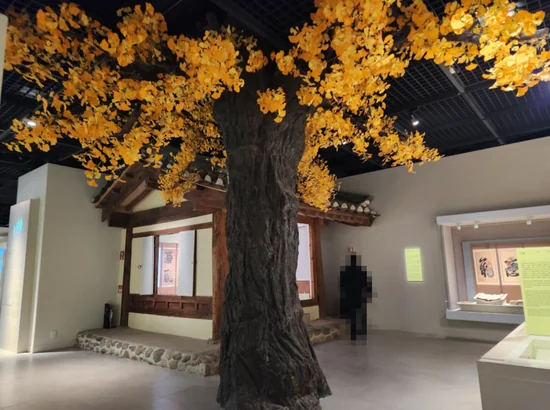
Special exhibitions create the strongest “reason to go now.” Two exhibitions are listed with clear dates and halls, so you can plan by deadline and interest. For first-time visitors, a balanced plan is one permanent gallery block plus one special exhibition.
If you try to do everything, the visit at the National Folk Museum of Korea often becomes rushed.
| Exhibition | Dates | Hall | Official theme summary |
|---|---|---|---|
| Birth, Everyone’s Celebration | 2025-12-03 to 2026-05-10 | Special Exhibition Hall 1 | Stories and relationships connected to childbirth |
| So Many Stories About Horses: Horses in Our Daily Life | 2025-12-16 to 2026-03-02 | Special Exhibition Hall 2 | Folk culture and everyday life connected to horses |
For a 90-minute visit, pick one exhibition based on interest (family/parenting vs. horse culture) instead of trying both.
5. Permanent galleries (3 core sections)
Permanent galleries work best when you follow the structure, not random entry. If you enter without a sequence, themes can feel repetitive, even though the exhibits differ.
Permanent Gallery 1 is titled “Koreans Today,” and Galleries 2–3 follow “year” and “life” flows. This structure makes the National Folk Museum of Korea easier to understand in one visit.
| Gallery | Title | What to look for |
|---|---|---|
| Permanent 1 | Koreans Today | Contemporary life culture themes (objects, taste, living together) |
| Permanent 2 | Koreans Through the Year | Seasonal customs and annual cycle (closed 2026-02-23 to 02-27; reopens 02-28) |
| Permanent 3 | Koreans Through Life | Life rituals from birth to ancestral rites (related publications are also introduced) |
A practical viewing order is “today → year → life,” because the themes connect naturally from present to cycle to life stages.
6. Guided interpretation (docent-style programs)
Guided interpretation increases how much you understand in the same amount of time. This is especially useful when special exhibitions are active, because key context comes faster.
The official visitor guide includes interpretation guidance (including sign-language interpretation details). If you want it on your visit day, check notices for the National Folk Museum of Korea in advance.
| Program type | Operation (official guidance) |
|---|---|
| Sign-language exhibition interpretation | Wed–Fri, 10:00–16:00. Apply 7 days in advance. Meeting point: Information Desk (Main Lobby, 1F). |
| Schedule checks | Check the Notices page for updates (e.g., interpretation available/unavailable days). |
If you have 2 hours, aim interpretation toward the special exhibition you choose, then apply the context to permanent galleries.
7. Children’s Museum reservation
If you visit with children, reservations are the first gate, not the exhibits. The Children’s Museum is guided as an online reservation-based visit rather than walk-in.
The reservation rules are specific: daily opening time, booking window, and cancellation by late arrival. This section matters most when pairing it with the National Folk Museum of Korea main building schedule.
| Item | Rule (official guidance) |
|---|---|
| Booking opens | Every day at 09:00 |
| Booking window | Within 2 weeks |
| Limit | 1 person, 1 reservation per day |
| Late arrival | If not entered within 30 minutes of session start, reservation is canceled |
| Changes | After booking: no adding people, no date change |
If 09:00 booking is hard on your schedule, separate the Children’s Museum to another day and keep this day for the main building only.
8. Outdoor exhibition area
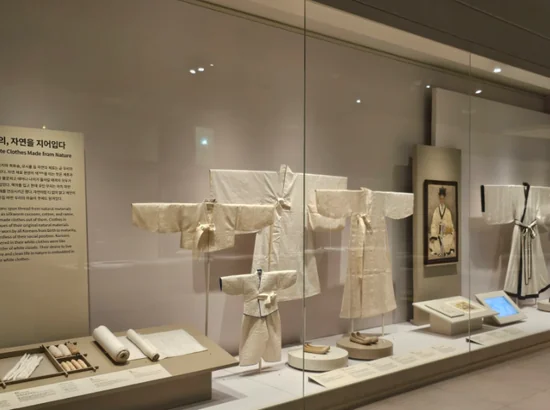
Outdoor viewing depends on whether access is allowed on your visit day. The official guide notes that weekends and holidays may restrict access to the outdoor exhibition area.
It also indicates weekday access as available guidance, so weekday plans can be smoother. If you include the outdoor area, reduce indoor time so the National Folk Museum of Korea route stays realistic.
| Day type | Official guidance summary |
|---|---|
| Weekends / holidays | Outdoor exhibition interior viewing may be restricted |
| Weekdays | Viewing is guided as available |
Decide first whether your visit is “exhibition-focused” or “walk-focused,” then assign time accordingly.
9. Getting to the National Folk Museum of Korea
The key fact is clear: the museum guide states there is no parking inside the museum. Because of that, planning a nearby parking option makes arrival time predictable.
The official children’s guidance page lists nearby parking options with walking time. For transport details, a monthly PDF also includes public transportation guidance.
| Option | Official guidance detail | Walk |
|---|---|---|
| Gyeongbokgung Parking (paid) | About 330m, walk along the stone wall route | ~5 min |
| MMCA Seoul Parking (paid) | Across the road | ~7 min |
| Chunchumun Public Parking (paid) | Near the former Cheongwadae area | ~9 min |
On weekend afternoons, include parking wait time and calculate backward from last admission to set your departure time.
As of February 16, The Prima Hotel Jongno is listed on Klook at just over KRW 100,000 per night, although rates can vary depending on the room type. As a 4-star hotel, it’s a convenient base for exploring Myeongdong and major attractions around Jongno. It’s also about 1 km from the National Folk Museum of Korea, roughly a 17-minute walk. I recommend this hotel because it offers a short, simple route to the museum and sits close to key spots like Jogyesa Temple, Gwanghwamun, Gyeongbokgung Palace, and the wider Jongno–Myeongdong area for sightseeing.
10. National Folk Museum of Korea Routes
A good route at the National Folk Museum of Korea starts with your available time, not a “perfect order.” For 90 minutes, you need strict selection; for 2 hours, add one special exhibition; for half a day, add a performance or the outdoor area.
A museum webzine note also mentions a Saturday 15:00 performance program, which can work as a time anchor. If you plan around it, your visit flow stays consistent without rushing.
| Duration | Suggested plan | Why it fits |
|---|---|---|
| 90 minutes | Permanent 1 → Permanent 3 | Clear “today + life” backbone |
| 2 hours | Permanent 1 → 1 special exhibition → Permanent 3 | Strong focus, less fatigue |
| Half day | Permanent 1–3 + 1–2 special exhibitions + (Sat 15:00 program if applicable) | Works best when start time is earlier |
In a 2-hour plan, choosing both special exhibitions often compresses the permanent galleries too much, so one exhibition is usually the better call.
“Check out other travel information”