This guide is part of the Seoul Winter Festa 2025 series, covering major winter programs across central Seoul.
Seoul’s winter season is not a one-day event. It works as a connected set of citywide programs—and Gwanghwamun Market functions as the central walk-through hub, where food, seasonal goods, and light-focused attractions connect into one evening route.
In this guide, you will find:
✔ operating schedule
✔ market concept and layout
✔ vendor categories
✔ must-try foods
✔ best time slots for crowds and photos
✔ a step-by-step walking route to nearby winter attractions
This structure helps international visitors plan winter travel in Seoul with minimal backtracking.
Core Summary
Gwanghwamun Market runs during the main Seoul Winter Festa period and is designed for evening visits that match illumination programs. It works as a single continuous route—food + seasonal shopping + lights + nearby attractions—so visitors can experience multiple winter highlights in one night.
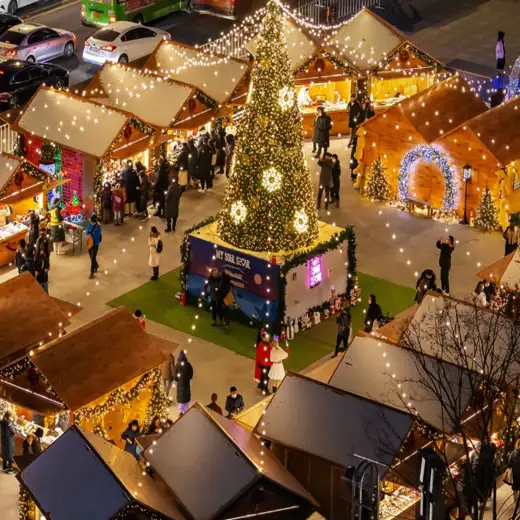
1. When and where does Gwanghwamun Market take place? (Schedule & Accessibility)
The Gwanghwamun Market is part of a coordinated winter-themed festival strategy. Instead of daytime sales, it runs during evening hours when visual content, lighting, and foot traffic reach maximum density.
Detailed Operating Information
| Category | Details |
|---|---|
| Festival Period | Dec 12, 2025 – Dec 31, 2025 |
| Main Operating Time | 17:30–21:30 |
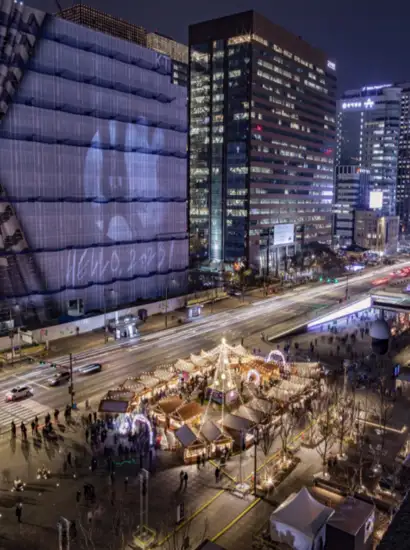
| Main Zone | Center axis of Gwanghwamun Square |
| Expected Peak Hour | 18:30–20:30 |
| Access Route | Subway Line 5 – Gwanghwamun Station Exit Direction |
| Nearby Event Areas | Cheonggyecheon, Seoul Square Ice Rink, SeoulLight |
Gwanghwamun Market runs from Dec 12 to Dec 31, 2025, and the market is organized into three seasonal phases. Vendors and the on-site vibe can shift by week, so checking the season dates helps you choose the best night for shopping and photos. (Season 1: Dec 12–18 / Season 2: Dec 19–24 / Season 3: Dec 25–31)
The Gwanghwamun Market structure reflects seasonal demand and behavior patterns of citizens and travelers. Rather than morning traffic, evening activation increases movement density and consumption. This is one reason the market is often treated as a convenient “entry point” for a winter evening route in central Seoul.
2. What is the concept of the 2025 Gwanghwamun Market? — Seasonal Village Format
The 2025 Gwanghwamun Market is expected to apply a seasonal “Santa Village”–style theme. Unlike single-lane commercial markets, the structure will be optimized for slow movement, visual stops, and longer dwell time.
Conceptual Elements That Increase Visitor Stay
| Category | Content |
|---|---|
| Seasonal Décor | Mini tree installations, lighting arches |
| Spatial Experience | Curved movement paths and standing zones |
| Passive Zones | Photo-identifiable structures |
| Decorative Branding | Market sign board + seasonal motif |
This results in the market becoming
→ A purchasing space,
→ A walk-through light zone,
→ A seasonal photography cluster.
International travelers especially recognize the Gwanghwamun Market as a “winter city attraction” rather than simple retail placement.
The market also features a Stamp Tour that guides you through key photo points in the Santa Village setup. You can collect stamps at four designated spots and complete the route as a light “walk-and-photo mission” while exploring the market.
3. Vendor Categories & Purchase Value Analysis
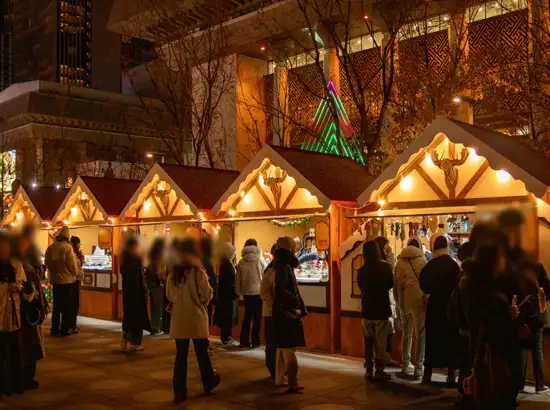
Items sold at the Gwanghwamun Market generally fall into four main groups. Below is the structured classification:
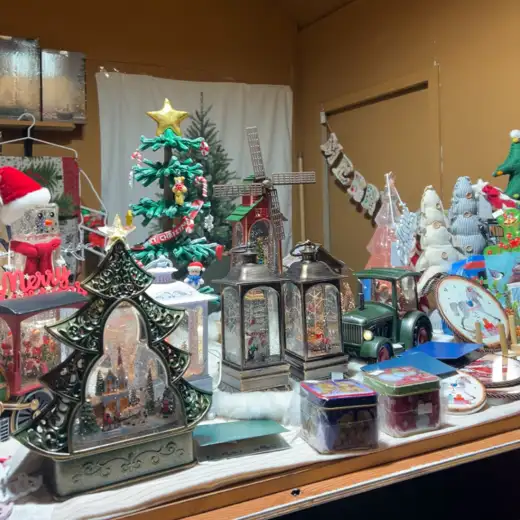
• Category A – Seasonal-themed merchandise
Likely products include
- small Christmas tree ornaments
- seasonal gift-wrap accessories
- decorative lighting items
- postcard sets
Usage value: retained even after trip ends → high travel memorabilia value
• Category B – Handmade & independent designer goods
Examples include
- crafted textiles
- custom bags
- scented craft items
- limited-run accessories
→ These provide distinct “non-mass-market identity.”
• Category C – Ready-to-consume food items
Classification:
- street fish cake bowls
- honey butter hotteok
- waffle variations
- winter brew teas
- hot chocolate
Each product type generates immediate satisfaction value.
• Category D – Winter-indoor lifestyle items
Examples:
- textured blankets
- scarves
- fabric pouches
- candle-type fragrance items
These items represent high post-visit usability value.
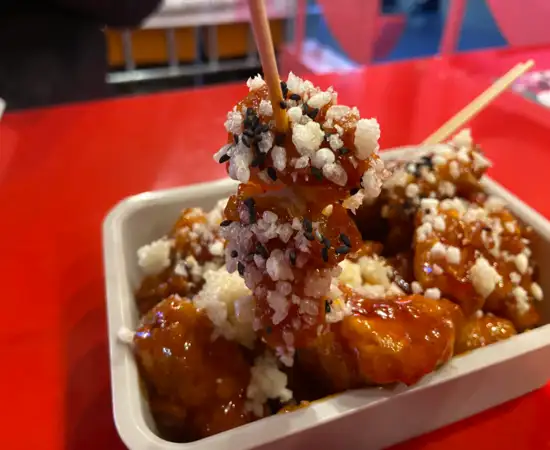
4. Must-try food selection at the Gwanghwamun Market
Food plays a crucial role in visitor satisfaction and time distribution.
Food–Purpose Table
| Food Type | Purpose Value |
|---|---|
| Fish cake soup | Heat recovery, low-effort consumption |
| Roasted sweet potato | Symbolic Korean winter snack |
| Hotteok | Sweet-type comforting snack |
| Hot chocolate | Visual warmth + photo framing |
| Warm fruit tea | Pairs well with food selections |
Foreign visitors typically evaluate
fish cake broth + hot sweet snack
as a classic winter-evening combination.
5. Recommended dining & café stops
After visiting the Gwanghwamun Market, indoor transition becomes necessary due to temperature change. Below are regional average prices based on typical shop clusters.
Recommended Hot Meal Type
| Menu | Avg Price |
|---|---|
| Tteokbokki set | ₩6,000 range |
| Fish cake cup | ₩3,000 range |
| Tempura | ₩1,500–2,000 per piece |
Recommended Warm Coffee Type
| Menu | Avg Price |
|---|---|
| Drip coffee | ₩5,000 range |
| Café latte | ₩5,500–6,500 |
| Small dessert | ₩4,500–6,000 |
Indoor seating nearby enables
▶ warming,
▶ photo editing,
▶ planning for next movement segment.
6. Time-based route recommendation & optimal flow path
Foreign travelers often prioritize efficiency and cost of movement. Thus, the Gwanghwamun Market should be structured as a “mid-point destination,” not a final stop.
Optimal Winter Evening Route
Cheonggyecheon Illumination Phase
→ Gwanghwamun Market Shopping & Food
→ SeoulLight Projection Content Viewpoint
→ Seoul Plaza Ice Rink Observation or Participation
Advantages of this route:
✔ Minimal distance per movement
✔ No return path required
✔ Continuous changes in scenery
Average travel time per section
| Route Segment | Estimated Duration |
|---|---|
| Cheonggyecheon → Market | 4–7 min |
| Market → SeoulLight | 2–5 min |
| Market → City Hall | 8–13 min |
This makes the Gwanghwamun Market ideal as a mid-axis program across Seoul winter festival routes.
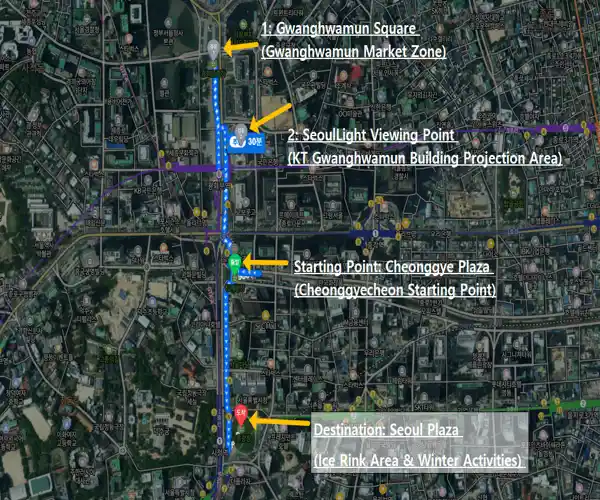
< Source, NAVER Maps >
✓ The walking distance from Cheonggye Plaza to Seoul Plaza is about 1.7 km, which usually takes around 30 minutes. As the walking route does not appear correctly on Google Maps, the path is displayed using Naver Map. At the beginning of this post, you can also see that Gwanghwamun Square is marked as the next destination after Cheonggye Plaza.
7. Visitor profile analysis & customized behaviors
Different visitor types experience the Gwanghwamun Market differently.
| Visitor Type | Most Beneficial Use |
|---|---|
| Family travelers | Early visits, easy-consumption food |
| Couples | Lighting period entry, slowed movement |
| International travelers | Long stay + multi-event connection |
Whereas local visitors often use short-cycle browsing, international travelers generally remain longer and consume wider categories.
8. Practical usage guidelines for international travelers
Before visiting the Gwanghwamun Market, the following objective information improves efficiency:
Guidance Table
| Instruction | Reason |
|---|---|
| Access via Subway Line 5 | No shuttle dependency |
| Prepare gloves or thermal hand warmers | Extended outdoor consumption |
| Expect peak movement after 18:40 | Lighting alignment |
| Carry mobile payment | Some vendors allow simple QR option |
| Expect food aroma attraction zones | High dwell inducement |
In winter markets, food aromas often influence where people pause and how long they stay—especially during peak evening hours.
“Check out other travel information”