When Seoul travel feels overwhelming with crowds and noise, it becomes meaningful to find a place where time slows down. My visit to Seokpajeong Seoul was exactly that kind of experience. As I walked up the gentle slope of Buam-dong, the sound of the city faded, and I could hear the breeze passing through pine trees. It felt as if I was slowly stepping into a quieter chapter of Seoul.
This Seokpajeong Seoul journey was not rushed; it was a soft pause.
1. About Seokpajeong Seoul & The Atmosphere
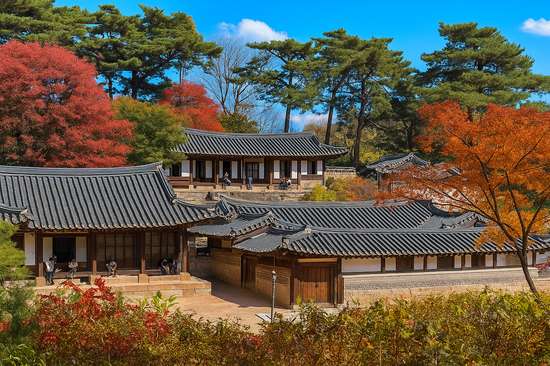
Seokpajeong Seoul is a historic villa once used by Heungseon Daewongun, the father of King Gojong of the Joseon Dynasty. Unlike grand palaces, this place expresses a quieter side of Korean aesthetics. The architecture blends with the natural rock formations of Inwangsan, forming a scene where pine trees, stone terraces, and traditional hanok roofs exist in harmony.
As I stood under the eaves, the curved roof framed the mountain ridge like a painting. It felt intimate and deeply peaceful — a reminder that Korean beauty often lies in restraint rather than decoration.
This was the moment when I realized why Seokpajeong Seoul is one of the most treasured hidden gardens in the city.
2. Visiting Route (Museum → Rooftop Garden → Hanok Walk)
To enter the garden, you first pass through Seoul Museum, which naturally transitions from indoor art to an open-air landscape. This makes the Seokpajeong Seoul experience feel layered and complete.
Seoul Museum Exhibition (30–60 min)
→ Rooftop garden overlooking Buam-dong
→ Hanok pavilion & stone terrace walk
→ Forest path along the valley
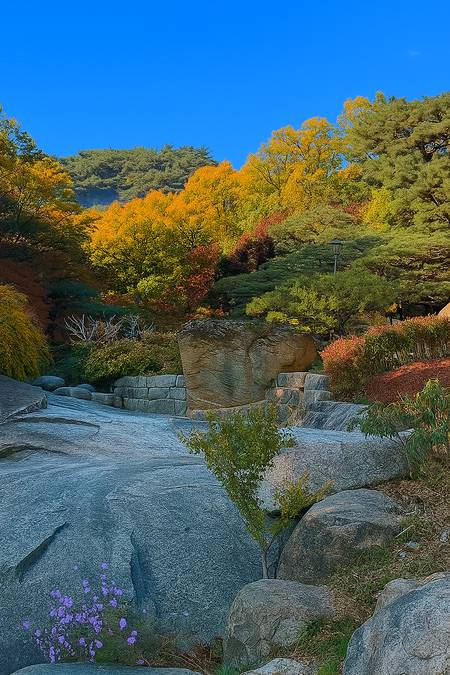
In the late afternoon, the light becomes gentle. The sunlight rests on the roof tiles and stone walls, and every movement feels slower — almost meditative.
During this Seokpajeong Seoul walk, you don’t simply look at scenery; you breathe with it, step by step.
3. Nearby Walking Route (Yoon Dong-ju Hill → Changuimun Gate)
After leaving Seokpajeong Seoul, a quiet walking path begins just a 5–10 minute stroll down the gentle slope. It’s a calm route, away from crowds, and fits well for those looking for a softer pace during their Seoul travel.
| Place | Atmosphere | Why Visit |
|---|---|---|
| Yoon Dong-ju Hill | Quiet and poetic | A place to slow down and feel the emotional tone of Seoul |
| Changuimun Gate | Historical and scenic | Offers views of the old city wall and Inwangsan ridge in one frame |
Yoon Dong-ju Hill is a space where your thoughts naturally become quieter. Sitting for a moment, watching the light move across the trees, you may notice that the calmness from your Seokpajeong Seoul visit continues gently here.
Following the same path, you’ll arrive at Changuimun. The old stone gate, the curve of the fortress wall, and the hillside homes of Buam-dong create a scene where history and everyday life quietly overlap. It is a short walk, but one that lingers softly in memory.
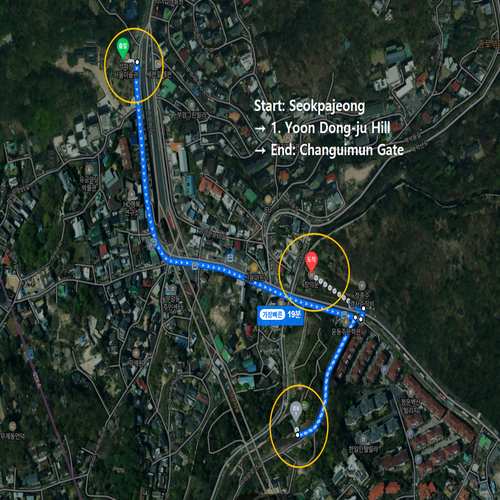
< Source, NAVER Maps >
✓ The walk from Seokpajeong to Yoon Dong-ju Hill and Changuimun Gate is about 929 meters — around 19 minutes of a gentle, quiet stroll through Buam-dong.
4. Restaurant Recommendation, Jaha Sonmandu
After a quiet walk, a warm bowl of soup tastes even more comforting. Jaha Sonmandu is a beloved traditional dumpling restaurant in Buam-dong and has been featured in the Michelin Bib Gourmand list. The flavor here is gentle, clear, and deeply rooted — exactly what Seoul food is loved for.
| Menu | Price | Notes |
|---|---|---|
| Mandu-guk | 20,000 KRW | Light, clean broth with delicate hand-made dumplings |
| Tteok-mandu-guk | 20,000 KRW | Soft rice cakes with rich warmth |
| Pyeonsu | Seasonal | Refreshing yet subtle balance of vegetables and meat |
The broth felt like something that quietly stays with you. It reminded me that Seoul food doesn’t need to be bold to be memorable — sometimes comfort is the flavor itself.
Eating here after Seokpajeong Seoul made the entire day feel complete.
5. Cafe Recommendation, Zaha 1993
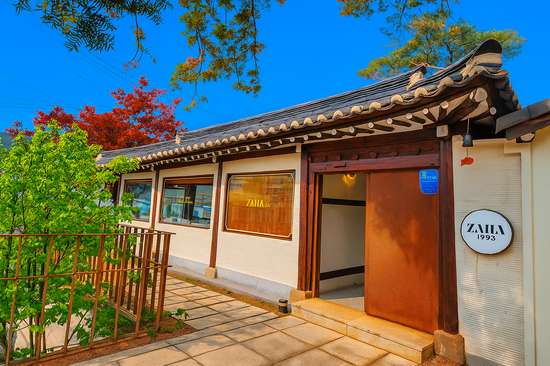
Just a short one-minute walk from the restaurant is Zaha 1993, a traditional Korean Seoul cafe designed inside a hanok. The space is calm, with high ceilings, soft wood tones, and a terrace that opens toward Inwangsan.
| Menu | Why It’s Loved |
|---|---|
| Matcha Misugaru | Soft, nutty, not too sweet |
| Americano | Balanced roast, not too acidic |
| Egg Tart / Financier | Baked on-site, best when warm |
Sitting near the window, watching the afternoon settle over the rooftops, I understood why this Seoul cafe is cherished by locals. It’s not just a place to drink coffee — it’s a place to rest.
6. Travel Tips + Best Photo Spots
| Tip | Detail |
|---|---|
| Best Time | 3–4 PM for soft golden light |
| Shoes | Comfortable walking shoes recommended |
| Closures | Seokpajeong, Jaha Sonmandu, and Zaha 1993 are closed on Mondays |
| Duration | 2–3 hours is the natural pacing |
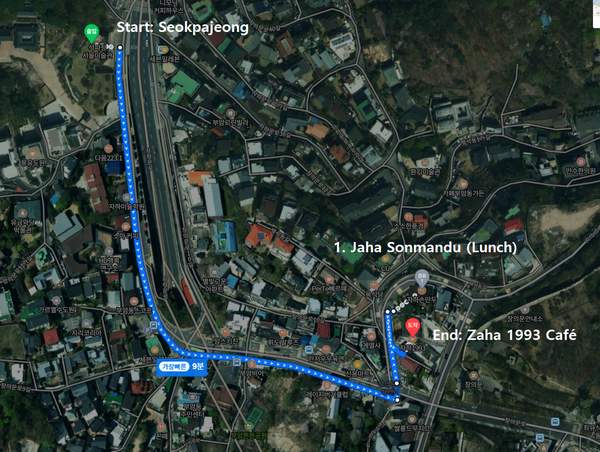
< Source, NAVER Maps >
✓ It’s about 533 meters from Seokpajeong Seoul to Jaha Sonmandu and Zaha 1993 Café, which is roughly a 10-minute walk. The route is gentle and easy, making it a pleasant stroll through Buam-dong.
Best Photo Spots
- The pavilion framed by pine trees and stone ridges
- The curve of the hanok roof against Inwangsan
- Rooftop garden overlooking Buam-dong
As my Seokpajeong Seoul journey came to an end, I felt a light stillness lingering inside. This wasn’t just a garden visit — it was a gentle reminder that Seoul travel can also be quiet, thoughtful, and deeply restorative.
If you are looking for a day in Seoul that is peaceful rather than busy, soft rather than loud, I truly recommend Seokpajeong Seoul.
“Check out other travel information”